The short answer:
Some under-eye skin looks tired because the surface skin is damaged. Some looks tired because the skin is thin and poorly supported. Lower OFA-Bleph™ is designed to address that deeper support layer when the anatomy calls for it.
Skin Does Not Float by Itself
In aesthetic medicine, skin quality is often discussed as a collagen problem. That is partly true. Collagen, elastin, pigment, redness, sun damage, and inflammation all matter. But skin also depends on what lives beneath it.
A useful analogy is soil beneath a plant. The leaf surface matters, but the deeper support environment matters too. In the face, subcutaneous fat, deeper facial fat, and orbital fat help create the surface contour that skin drapes over. When that layer is depleted, tethered, or displaced, the skin can look thinner, darker, creased, or less hydrated-looking even if the skin surface has not been directly treated.
Around the eye, this is especially visible because lower eyelid skin is thin, mobile, and unforgiving. A small structural shadow can look like a skin problem.
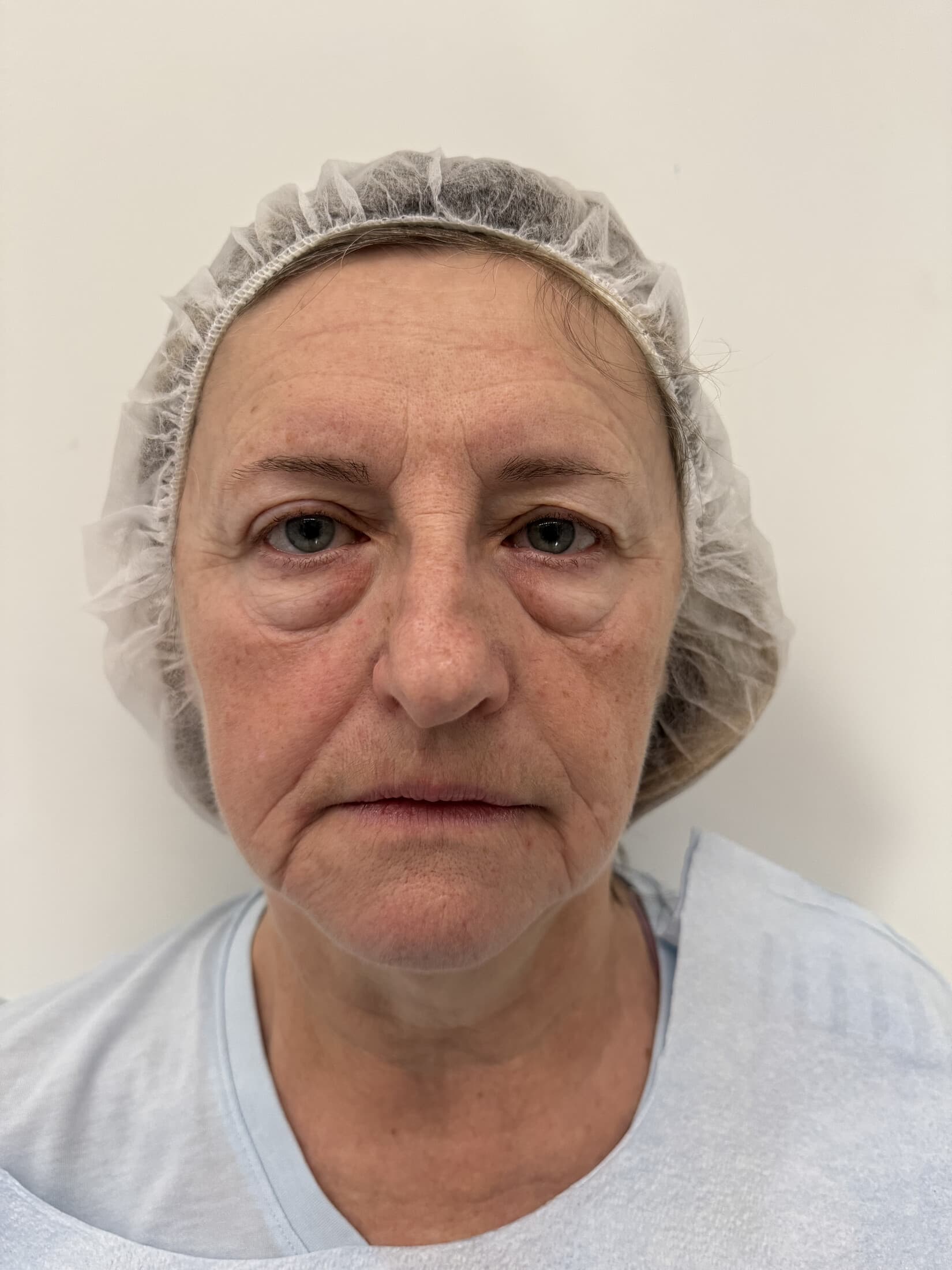
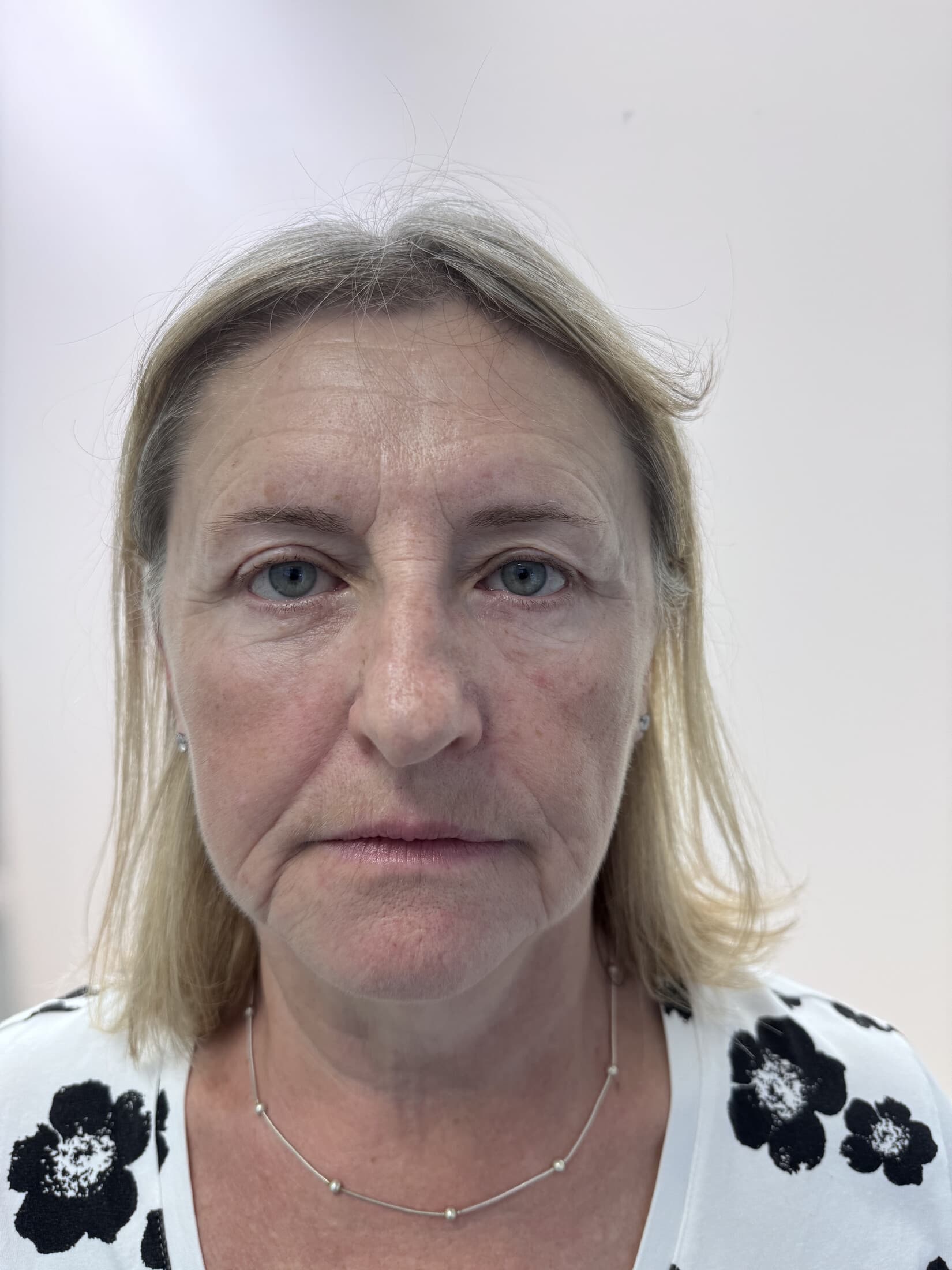
Educational Case Example
Lower OFA-Bleph™: support changes the lid-cheek contour
This consent-confirmed lower OFA-Bleph™ case is included to show how the skin can look different when the support beneath it is different. The learning point is not that surgery replaces every surface treatment; it is that contour, shadow, and skin appearance are often connected.
Surface texture
Fine creasing, roughness, and thin-looking skin may improve when the tissue underneath is better supported.
Light reflection
A smoother lid-cheek curve reflects light more evenly, which can make the under-eye area look brighter even without a pigment treatment.
Structural shadow
When orbital fat is repositioned into the tear trough, the dark hollow can soften because the shape has changed.
Educational example only. Individual anatomy, healing, lighting, skin quality, and results vary.
What Happens When the Tear Trough Is Released?
The tear trough is not just a line on the skin. It is a tethered transition where the lower eyelid, orbital rim, cheek, orbicularis muscle, retaining ligaments, and orbital fat meet. When that retaining zone is tight, the skin can remain pulled down into a groove even when the patient is young.
Lower OFA-Bleph™ releases that deep-plane tether when appropriate and repositions the patient's own orbital fat over the rim and into the hollow. The bag and the hollow are treated together. The skin above is not resurfaced, but it is now draping over a better supported layer.
That is why a patient can sometimes show improved lower eyelid skin quality after surgery even without laser, microneedling, or resurfacing. The skin was not the only problem. The support underneath the skin was part of the problem.
Surface treatments
Lasers, peels, microneedling, and energy
These can be helpful for pigment, redness, texture, and collagen remodeling. They work best when the underlying contour is already supported or when the skin itself is the main problem.
Support treatments
Fat repositioning, microfat, and nanofat
These address the tissue environment beneath the skin. In selected patients, that layer can matter as much as the dermis, because skin drapes over what supports it.
Surgical judgment
Choosing which layer is actually responsible
The consultation separates skin surface, orbital fat, ligament tethering, cheek support, pigmentation, and prior filler so the plan is not aimed at the wrong layer.
Why Fat Is Different From Filler or Collagen Stimulation
Collagen-stimulating treatments work mainly by asking the skin to remodel itself. That can be valuable, but it does not automatically restore a missing support layer beneath the skin. Filler can add volume, but it is a material placed into a space.
Orbital fat repositioning is different. It uses the patient's own tissue that is already present around the eye. In selected lower eyelid patients, that fat can be moved from the bulge into the hollow, preserving a useful volume resource instead of discarding it.
This is one reason EyeFACE planning is preservation-first. The goal is not to keep every bit of tissue. Selective reduction can be right for some anatomy. But if the fat can support the eyelid-cheek transition, it is often too valuable to treat as waste.
Where Microfat and Nanofat Fit
Sometimes the useful fat is already in the eyelid and can be repositioned. Other times, selected patients may benefit from carefully processed autologous fat from another body area. Microfat can provide small-volume structural support in deeper or middle layers. Nanofat is processed differently and is generally used as a skin-quality adjunct rather than a true volume filler.
These are powerful tools, but they are not casual spa treatments. Facial and periorbital fat grafting can cause irregularities, overcorrection, undercorrection, prolonged swelling, and rare but serious vascular complications. The periorbital area requires careful anatomy, conservative technique, and the judgment to know when not to inject.
At EyeFACE, microfat and nanofat belong within a surgical planning framework, not as a shortcut around diagnosis. The question is always: which layer is actually creating the problem?
How to Think About Your Own Under-Eyes
If your under-eye concern is mainly pigment, redness, or surface texture, skin treatments may be the right starting point. If your concern is a bag, hollow, tear-trough groove, or dark shadow that changes with lighting, the deeper contour may be more important.
The strongest plans often combine both ideas over time: structural support first when needed, then skin optimization with EyeFACE Advanced Skin™ when the surface layer would benefit from additional refinement.
Related EyeFACE Education™
Medical References