Credentials & Training
Why an Oculofacial
Plastic Surgeon?
ASOPRS fellowship is a one- to two-year oculofacial subspecialty. It follows a full ophthalmology residency, then dedicated training in the eyelids, orbit, lacrimal system, and periorbital face.
< 30
Surgeons accepted annually across all of North America
1–2
Years of dedicated oculofacial subspecialty training
1,000+
Periorbital procedures during fellowship alone
100%
Focus on eyelids, orbit, lacrimal, and periorbital face
Training Pathways in Eyelid Surgery
When a patient searches for an eyelid surgeon in Toronto, they encounter physicians from several different training backgrounds — all of whom may perform eyelid procedures, and all of whom present similarly on a practice website. The differences are not visible on the surface. They live in training depth, anatomical knowledge, and the ability to recognise and manage complications.
The American Society of Ophthalmic Plastic and Reconstructive Surgery (ASOPRS) fellowship is a subspecialty pathway in periorbital and oculofacial surgery. It requires completion of a full ophthalmology residency before the fellowship. ASOPRS surgeons begin with training in the eye itself, then add dedicated training in the eyelids, orbit, lacrimal system, and periorbital face.
That sequence — ophthalmology residency, then oculofacial fellowship — is how the ASOPRS pathway is structured.
Training Pathways
| Background | Base Training | Eyelid Focus | OHIP Eyelid | ASOPRS |
|---|---|---|---|---|
| Oculofacial Plastic SurgeonDr. Gill | Ophthalmology (full ocular training) | Entire career | ✓ | ✓ Required |
| General Plastic Surgeon | General surgery | Small fraction of practice | Not a typical focus | Different pathway |
| Facial Plastic Surgeon | Ear, nose & throat | Partial — face, not ocular | Not a typical focus | Different pathway |
| Dermatologist | Skin medicine | Skin surface only | Not a surgical eyelid pathway | Different pathway |
| Ophthalmologist (general) | Eye medicine & surgery | Limited — primarily globe | Limited | Eligible but not required |
Why It Matters — Practically
The orbit is not just a face structure
The lower eyelid sits millimetres from the globe. A malpositioned eyelid can cause corneal exposure, dry eye, and visual compromise. ASOPRS surgeons complete a full ophthalmology residency before the subspecialty fellowship. That ocular training is part of the pathway.
Eyelid function, not just appearance
Blepharoplasty is not purely cosmetic. The eyelid protects the ocular surface, distributes the tear film, and maintains the corneal health that preserves vision. ASOPRS training covers both appearance and eyelid function. Outcomes are assessed against function as well as photographs. Individual results vary.
Revision complexity
Lower eyelid revision surgery is technically demanding. Scarring, malposition, and tissue loss from prior operations are part of what oculofacial fellowship training covers. The first operation is planned with that in mind.
OHIP-covered eyelid surgery
Functional eyelid conditions — ptosis, ectropion, entropion, visual field obstruction — are covered by OHIP when criteria are met. Oculofacial training includes documenting these conditions, coordinating visual field testing, and working through OHIP eligibility.
The ASOPRS Fellowship Pathway
Medical School
4 yearsFull medical degree. Foundation in physiology, pharmacology, pathology, and clinical medicine.
Ophthalmology Residency
5 yearsComplete training in the eye — retina, cornea, glaucoma, strabismus, and anterior segment. The ASOPRS pathway includes this residency before the oculofacial fellowship. The globe is part of that training.
ASOPRS Fellowship
1–2 yearsDedicated subspecialty training in oculofacial plastic surgery: eyelid reconstruction and aesthetics, orbital surgery, lacrimal system, periorbital facial rejuvenation, and trauma. Fewer than 30 positions available across North America annually.
ASOPRS Membership
OngoingActive membership requires continuing education, peer review, and adherence to professional standards. The credential is maintained — not just awarded.
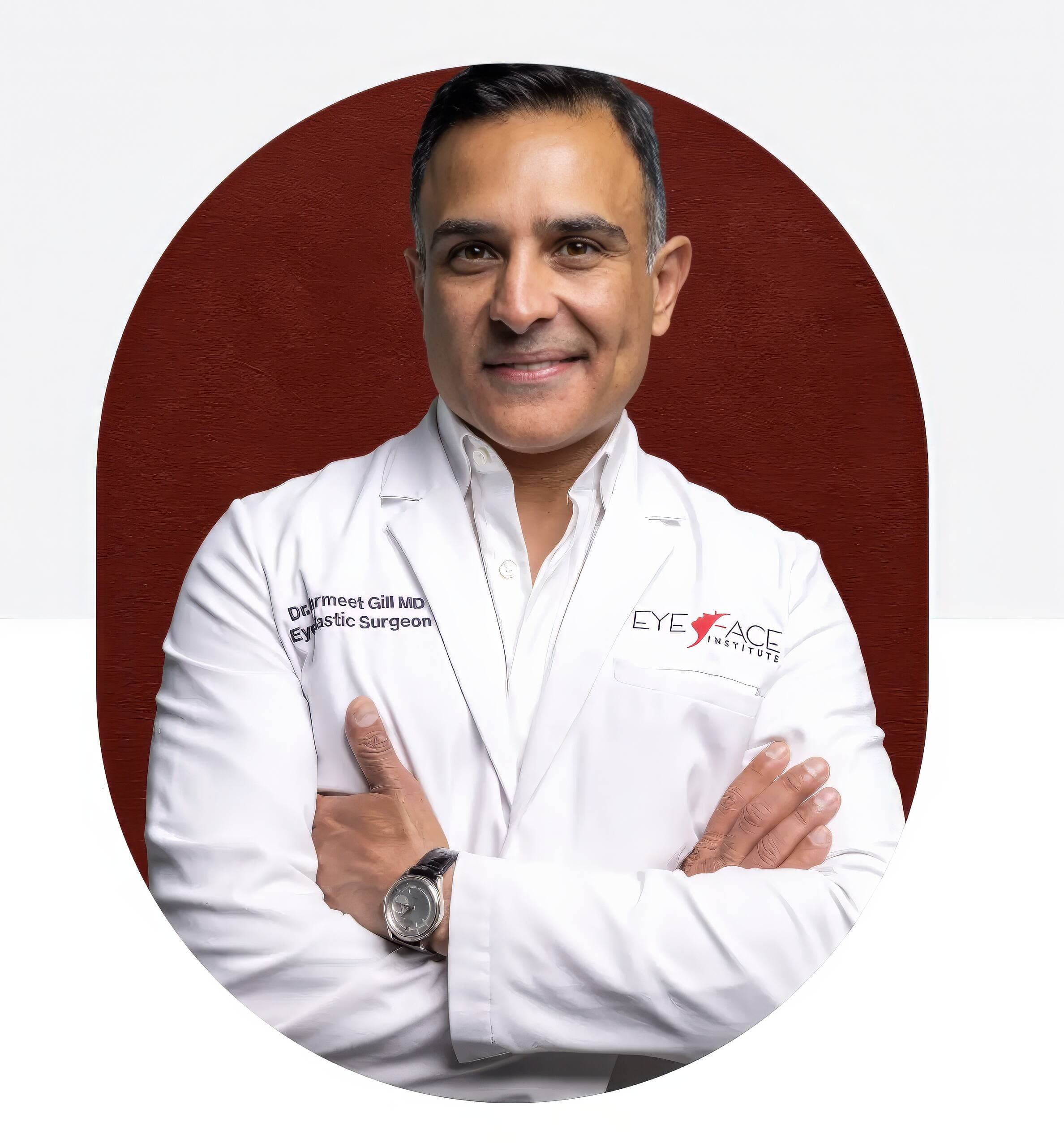
About Dr. Gill
Dr. Harmeet Gill — Toronto's Oculofacial Specialist
Questions to Ask Any Eyelid Surgeon
- 1Are you ASOPRS fellowship-trained?
- 2Did you complete an ophthalmology residency before your fellowship?
- 3How many lower eyelid procedures do you perform annually?
- 4Do you perform OHIP-covered functional eyelid surgery?
- 5Where is your surgical facility accredited?
- 6Who manages post-operative complications if they arise?
These are not adversarial questions — they are the questions any informed patient should ask before eyelid surgery. A confident, well-trained surgeon will answer all of them without hesitation.
Begin Your Consultation
In-person $400 + HST (Eltraderm 3-Step Skin Care Program included) · Virtual $300 + HST.