The short answer:
Under-eye hollows, bags, and dark-circle shadows can be congenital. In the right patient, lower OFA-Bleph™ and RERF-M planning can treat the support anatomy rather than chasing the shadow with repeated surface treatments or filler.
A Young Patient Can Still Have a Structural Problem
Many people assume under-eye bags and dark circles are signs of aging, poor sleep, or thin skin. Sometimes they are. But some patients have a lower eyelid and cheek structure that naturally creates a hollow shadow very early in life.
This is similar to the way rhinoplasty patients may seek treatment for a nose shape they have always had. The concern is not necessarily aging. It is the three-dimensional anatomy: bone projection, orbital rim support, tear trough tethering, eyelid position, cheek support, and the way light falls across those surfaces.
The treatment should match the anatomy. If the dominant issue is structural, a surface-only treatment may improve texture or pigment but leave the hollow and shadow largely unchanged.
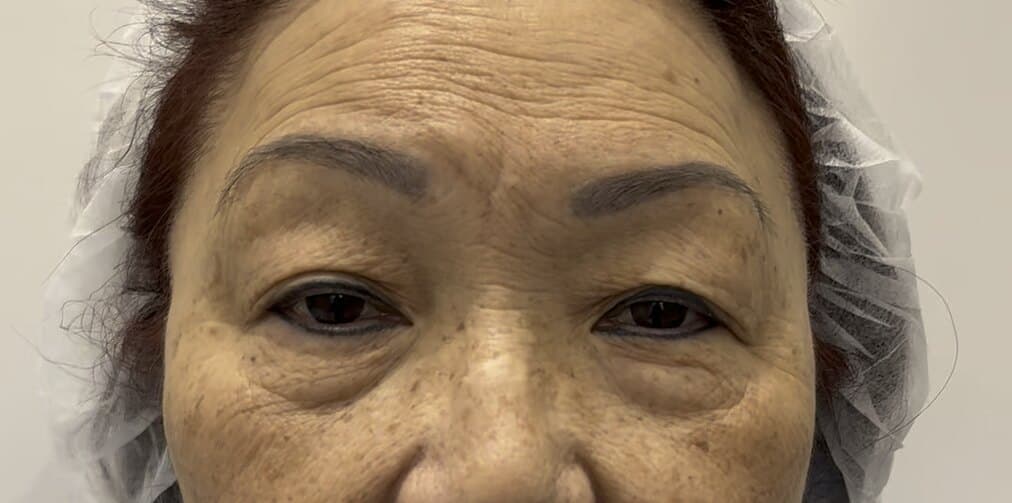
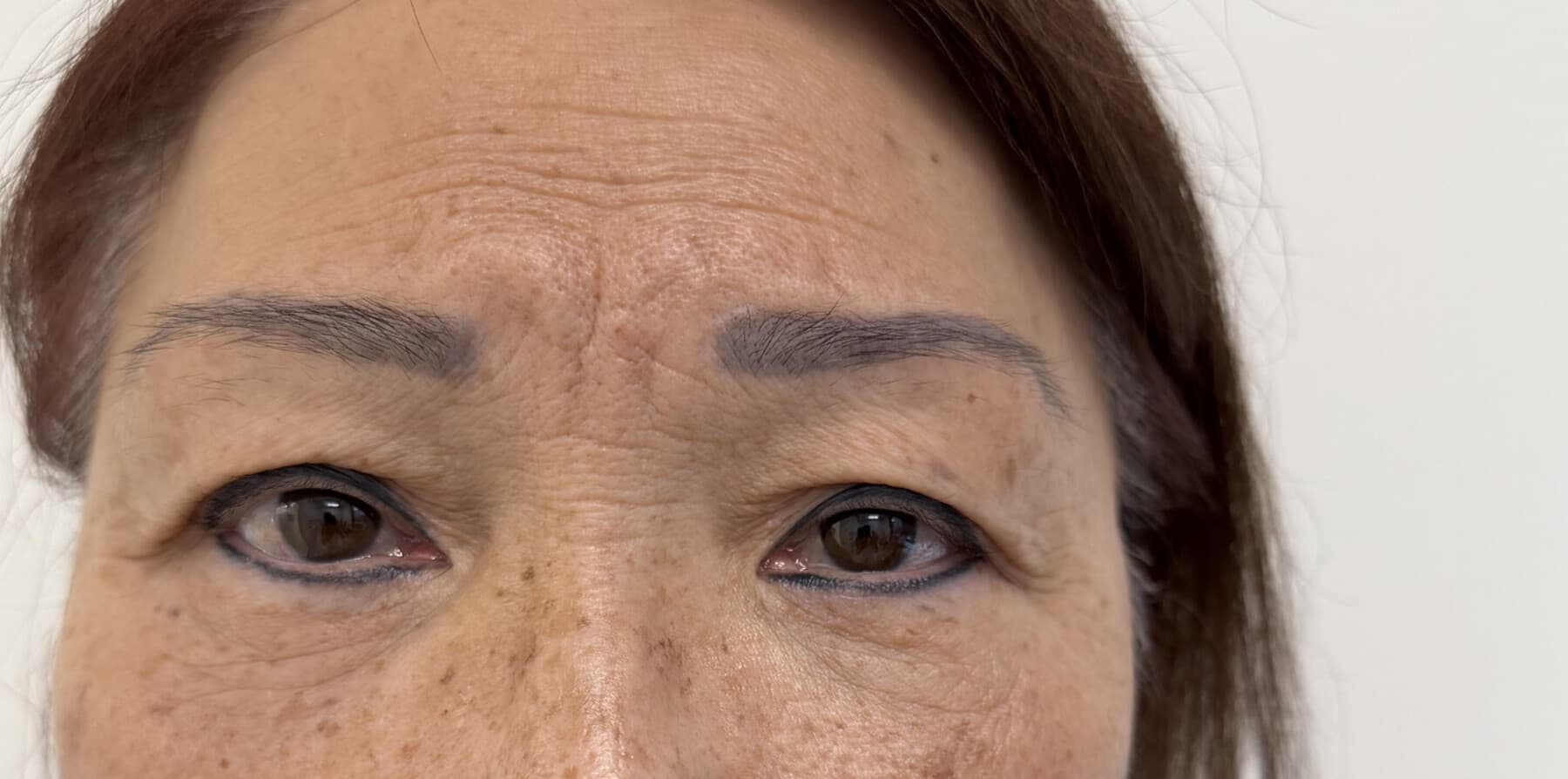
Educational Case Example
OFA-Bleph™ with RERF-M: eyelid architecture and support
This consent-confirmed case is used here as an anatomy example, not as a template. The cropped view keeps attention on the relationship between the upper eyelid platform, lower eyelid support, orbital fat, tear trough tethering, and midface vector.
Educational example only. Individual anatomy, healing, eyelid-shape goals, and results vary.
Bone and orbital shape
Some patients have a flatter or more recessed infraorbital rim from youth. The lower eyelid can look hollow even when there has not been meaningful aging.
Tear trough tethering
The tear trough is a retaining zone. When it is tight, light falls into a groove and creates a dark-circle shadow.
Midface vector
The cheek and lower eyelid are connected. In selected patients, the midface has to be revectorized for the lower eyelid result to look stable and natural.
Why Lower OFA-Bleph™ and RERF-M May Be Planned Together
Lower OFA-Bleph™ focuses on the lower eyelid: releasing the tear trough when appropriate, repositioning orbital fat, and improving the lid-cheek contour. RERF-M adds midface vector planning. That matters when the cheek-lower eyelid relationship is part of the problem.
In selected patients, the midface must be lifted or revectorized so the lower eyelid is not being treated in isolation. The goal is not simply to flatten a bag; it is to create a stable, natural relationship between the lower eyelid, cheek, orbital rim, and eye shape.
This is why a consultation is anatomy-led. Two patients can both say “dark circles,” but one may need skin treatment, one may need filler elsewhere, one may need lower eyelid fat repositioning, and one may need a more complete lower eyelid-midface plan.
Eyelid Shape Is a Separate Conversation
Not every patient wants their eyelid shape changed. Some patients want the lower eyelid hollow improved while preserving their existing eye shape as much as possible. Others specifically ask for a subtle almond-shaped refinement.
Those are different goals. A requested almond-shaped change involves the lower eyelid position, lateral and medial corner relationships, midface vector, and the balance between support and softness. It should never be treated as a default add-on.
At EyeFACE, this is discussed directly before surgery so the plan reflects the patient's taste, anatomy, and tolerance for change.
How Durable Is Repositioned Orbital Fat?
Lower eyelid fat repositioning is not designed as a repeated maintenance treatment. The goal is to move the patient's own orbital fat from a bulging or poorly positioned compartment into the hollow where support is needed.
When the anatomy is right and the fat is secured appropriately, this can be a durable structural change. That does not mean the face stops aging. Skin quality, brow position, cheek volume, facial ligaments, and bone support can still change over time.
The honest way to think about it is this: repositioned orbital fat is not the same category as temporary filler or a skin treatment series. It is a surgical support maneuver. Future refinement may still be considered for other aging changes, but the lower eyelid fat transposition itself is not planned as a routine repeat procedure.
Related EyeFACE Education™
Medical References